

Let's Reconsider the Candidate Experience
A candidate's experience when applying for job(s) in your company is a yardstick to measure your commitment to employee experience.
A candidate's experience when applying for job(s) in your company is a yardstick to measure your commitment to employee experience. As candidates become more strategic in their approach to job search, time will become a valuable commodity. Candidates will no longer be subjected to lengthy, redundant and obsolete application processes. They will be interested in applying for jobs in a system that is simple, guided and clearly encourages them to complete the job application process from start to finish.
The candidate experience is a key element of your employer brand.
A company that claims to be innovative and employee focused must ensure it's candidate experience is reflective of it's mission. So, what does this mean for you? Know your audience! Your potential future employees must be be able to trust your claim & a beautiful way to prove your commitment to their experience is ensuring your job application process is innovative, simple & employee experience focused.
Career Website:
The first point of contact for the job application process is the career website. This is where the elements of "visual design" and "user experience" come into play. Research shows that humans are attracted to things and people they find aesthetically pleasing. Likewise, humans are able to trust things and people they find attractive. The visual design of the career website can make a difference in candidates' perception of the company. In addition, if candidates have a good experience with a career website, it is logical to assume that they will trust the company and proceed with their job application from start to finish.
Let's Analyze the Steps Involved in the Job Application Process
Step 1: Focus on the Visual Design
The career website should be filled with engaging media that showcase what it's like to work for your company. This is an excellent opportunity for you to include pictures and videos of your workplace design, diversified culture, employee reviews, company activities and company benefits. Be sure to use captivating words and fonts that are aesthetically pleasing to your audience. Collaborate with your UX design team to craft a career website that is sleek, simple, modern and user experience friendly.
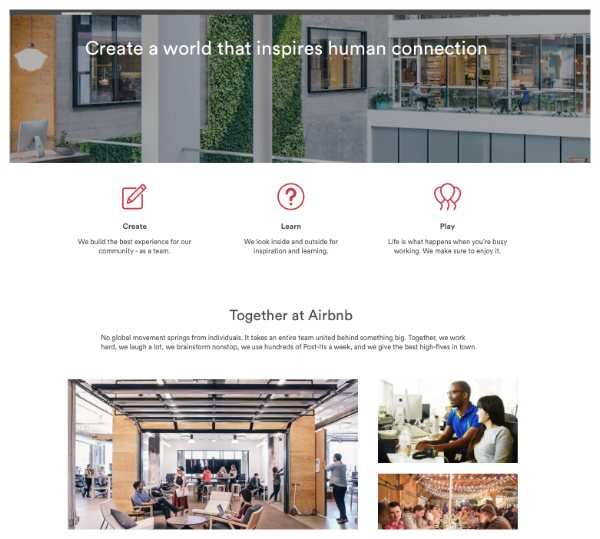
Source: Airbnb
Step 2: Organize Job Postings
The frustration from searching for jobs via "keywords" or "locations" tops no other. It operates on the assumption that candidates are knowledgeable of your organizational structure i.e. the number and types of departments an organization has & the locations it operates in. By focusing on the candidate experience, you can simplify the search experience for candidates by organizing job postings according to these two categories -departments & locations.
While this step focuses on the candidate experience from the perspective of job applications via career websites, it is important to know that some candidates are more inclined to search for jobs via social media & job boards. For such candidates, you can choose to include a direct application link on the job board postings to eliminate redundancies in the application process.
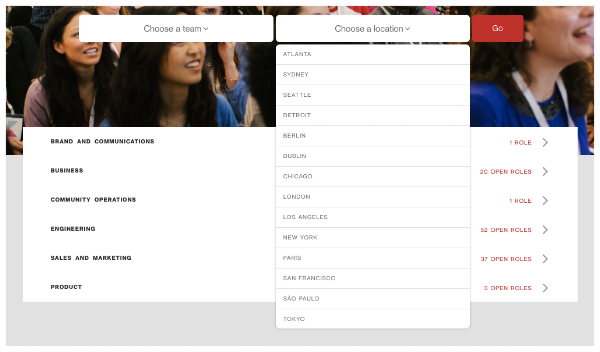
Source: Pinterest
Step 3: Simplify Job Descriptions
The most important thing in this step is to ensure the job posting contains the most recent version of the job description. An outdated job description will affect the candidate's future employee experience as there will be discrepancies in the employee's expectations vs actual reality.
Secondly, it is important to eliminate "noise" in the job description. An effective job description should be simple, brief and straight to the point. As mentioned earlier, time is a valuable commodity for candidates who engage in strategic job search. So we want to use compelling words while arranging information in a simple and concise manner. Information such as company benefits, that have been included in the career home page can be excluded from the job description.
Finally, I believe it is important to pay attention to the words used in the job description as they can affect the candidate's perception of their ability to perform the job. Words such as "manage, handle, ensure & engage" provide a sense of autonomy to candidates while words such as "required or responsible" create a sense of anxiety & tension in performing the job.
An effective job description should include:
a brief description of your company and/or department goals
the main reason why the job position is required
how the job will contribute to achieving your overall company and/or department goals
the main job responsibilities
most relevant job qualifications
job location
any relevant disclaimers **
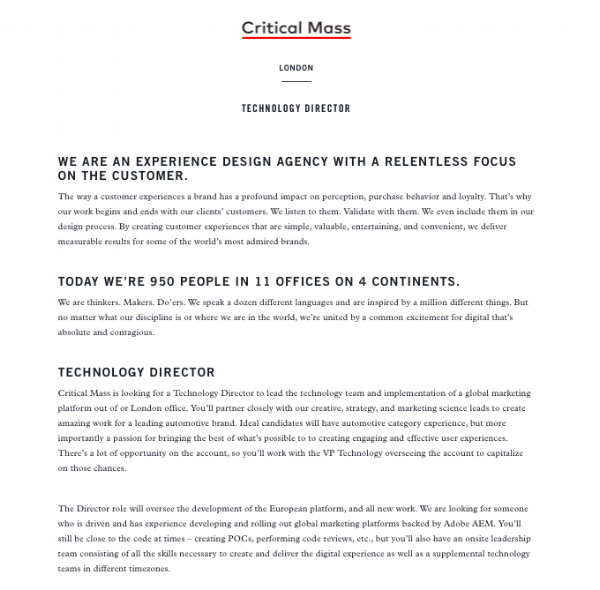

Source: Critical Mass
Step 4: Don't Ignore the User Experience
The concept of reconsidering the candidate experience involves removing redundancies in the job application process. In an ideal world, I believe candidates would prefer a system that tears down the "sign-in/register" barrier. Candidates would rather complete their application by filling in their contact information, uploading their resume and/or cover letter and then click the submit button in one page. I have titled this the "one-page submission". An example is shown below:
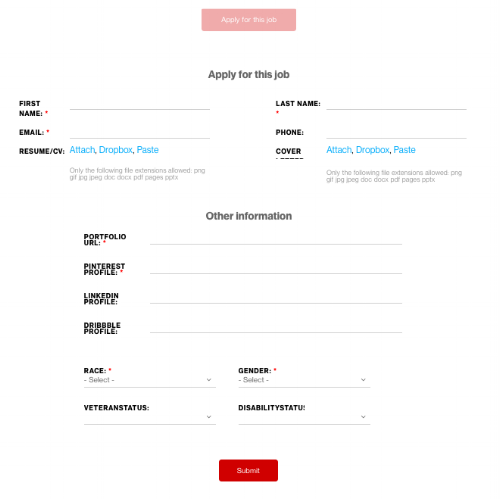
Source: Pinterest
However, due to system configurations, legal & security reasons this option is not viable to every company. So I asked myself, how then can we provide a rationale to candidates explaining the importance of registry in the job application process? include a disclaimer on the implication of "new user registration". This way, candidates have a clear understanding of the requirement(s) and can proceed with their job application with little to no frustration.
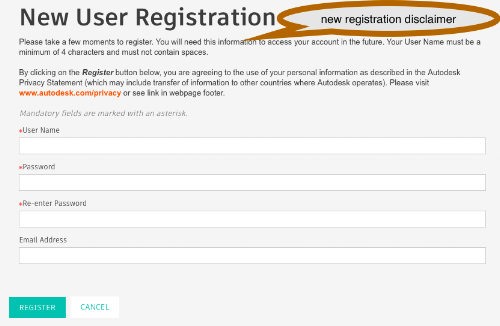
Source: Autodesk
For companies who choose to proceed with this method: it is important to note that the candidate experience shouldn't stop at the registration process. Simplicity and a friendly user experience should continue until the final submit button.
I played around with Cisco's job application system to test it's user experience via the registration process. In Cisco's system, candidates are required to create a profile when they register. The following information was requested: Contact, Education, Work History & Resume. Once this information is uploaded it is stored in the candidate's profile. Therefore, if a candidate chooses to apply to a new job at a later date, the candidate simply clicks on the apply button, logs in and is directed to a final submission page to complete the job application process. This brings us back to the simplified one-page submission process. (A disclaimer on editing your profile should be provided to candidates as a reminder to use their most relevant information when submitting their application).
By combining the features of the one-page submission & disclaimers you will provide a simplified and transparent job application process to your candidates.

Source: Cisco

Source: Cisco
Step 5: Include a Progress Indicator
If we look into the online shopping experience we notice that companies provide customers with updates on their orders for each purchase. Customers receive a thank you/order received confirmation email, followed by a shipping confirmation email and finally, a delivery confirmation email. This logic can be applied to the job application process.
You can utilize the Applicant Tracking Systems (ATS) to inform candidates of your decision(s) for each step of the application process. Keeping applicants informed of each step of the application process provides transparency to the applicants- a key element of the employee experience. If the future of work encourages strategic job search, it is logical to assume candidates will be selective with their job applications. So let's not waste these applicants time if we decide not to move ahead with their application. A simple rejection email to an applicant goes a long way in the candidate experience. This way applicants can easily move on with their job search rather than operate on assumptions.

Source: jazzhr
Step 6: Kickstart the Employee Experience
Once you've conducted interviews, negotiated salaries and made your final offer to your selected candidate, the on-boarding process begins. Now the candidate transitions into an employee. Ensure there is consistency in the candidate experience and the employee experience.
Conclusion: The candidate experience provides an excellent opportunity for companies to put their best foot forward in regards to employer branding. Yet, we see many organizations ignoring the candidate experience in the hiring phase. Looking at the customer experience for online shopping, organizations are taking measures to ensure customers do not drop-off at any stage in the shopping experience. The same effort can and should be applied to the candidate experience.
As companies focus on these steps, a strong message of commitment to the candidate & employee experience is sent to potential employees. You attract the best talent by convincing them that you are the best company to work for!